May 2026
Hypertension is one of the most common chronic diseases worldwide and a major risk factor for coronary heart disease, myocardial infarction, stroke, renal insufficiency, and even death. According to statistics, the annual number of deaths from cardiovascular diseases globally is approximately 19.2 million, and the number of deaths attributable to hypertension is about 10.8 million.
Risk Range
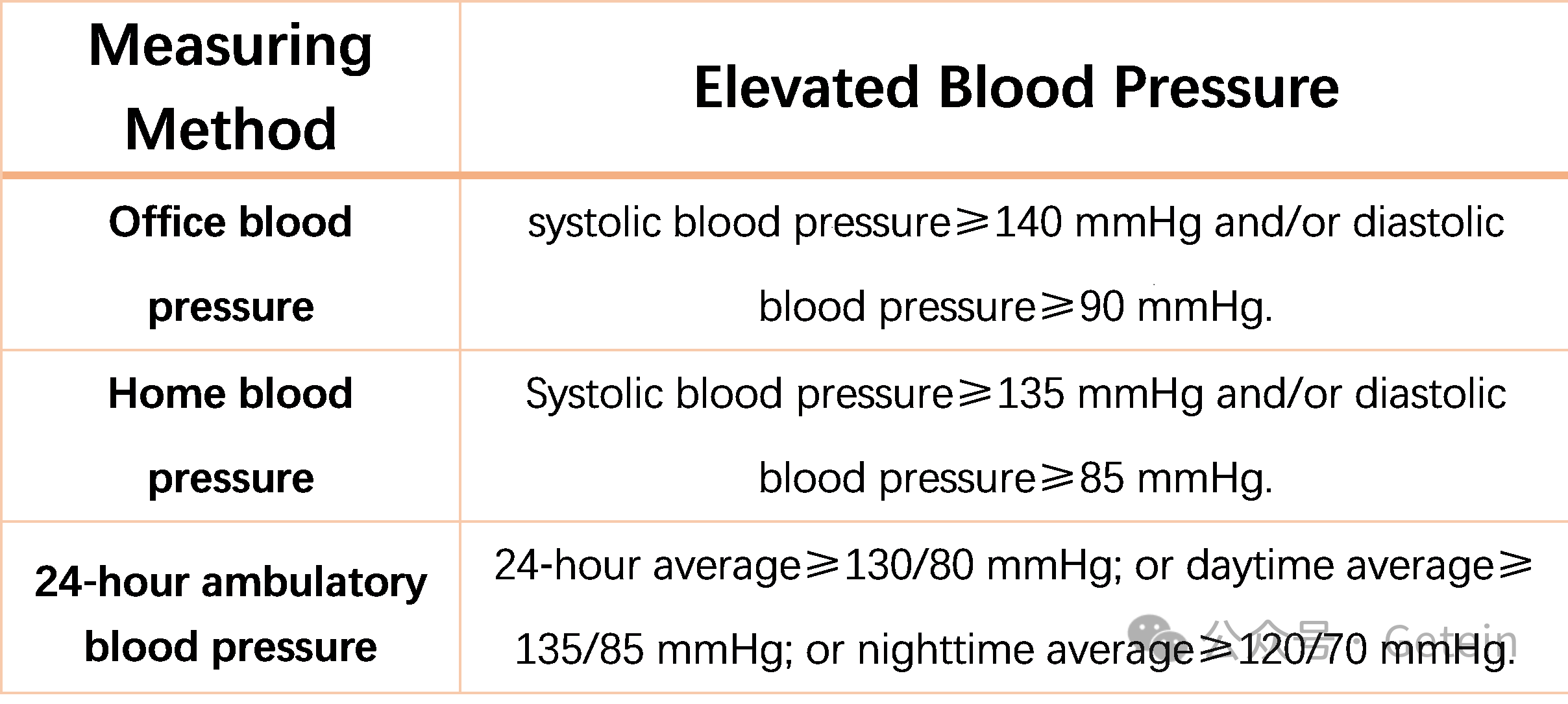
Hypertension can be primary (90–95%, unknown cause) or secondary (5–10%, due to conditions like renal artery stenosis, primary aldosteronism, or Cushing's syndrome). A blood pressure monitor tells you whether blood pressure is elevated, but it cannot answer why it is high or what damage has been caused.
Priority groups for hypertension check-up
1.Young hypertensive patients (<40 years old).
2.Resistant hypertension (poorly controlled despite multiple medications).
3.Hypertension combined with abnormalities such as hypokalemia.
4.Patients with suspected secondary hypertension.
5.Hypertensive patients with coexistent obstructive sleep apnea.
What are hypertension biomarkers
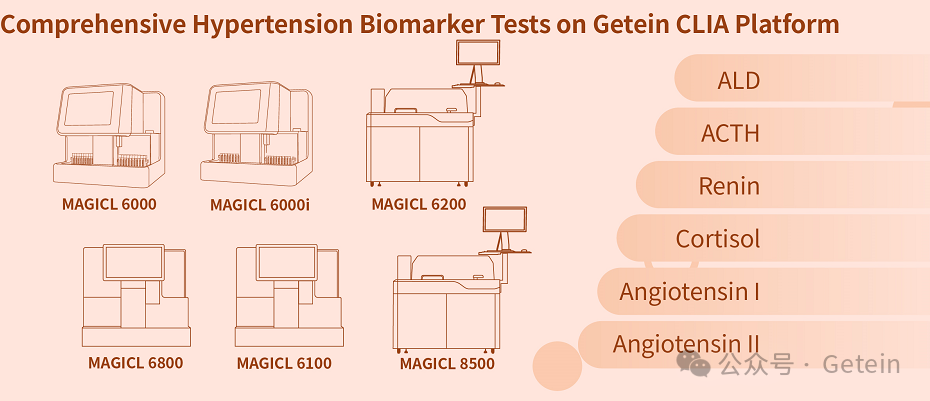
Renin, Angiotensin I, Angiotensin II, ALD, ACTH and Cortisol are hypertension biomarkers using to assist in the differential diagnosis of primary and secondary hypertension by measuring hormone or factor levels, thereby providing a basis for clinical diagnosis and treatment. They are involved in the following pathways:
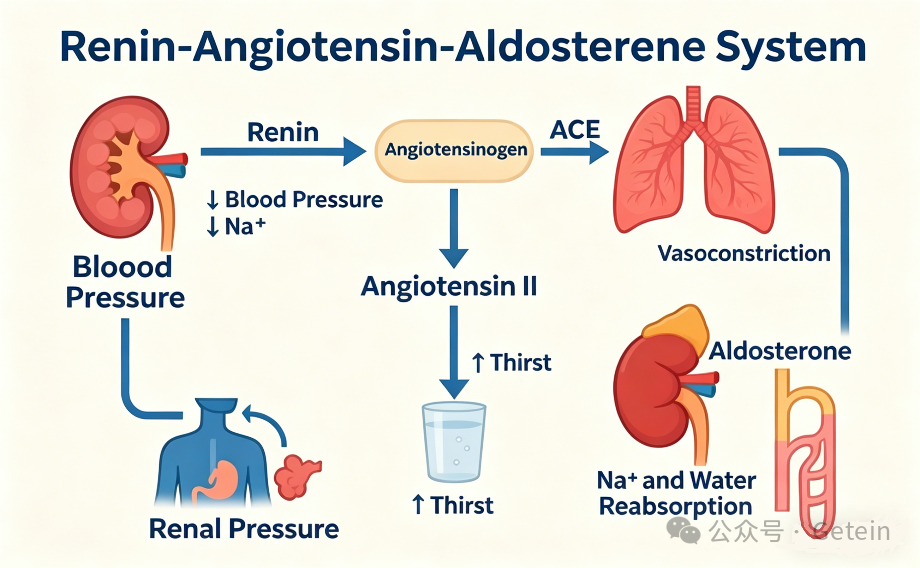
Renin‑Angiotensin‑Aldosterone System (RAAS)
The RAAS is a central hormonal cascade that regulates blood pressure, fluid balance, and systemic vascular resistance. When renal perfusion pressure drops or sodium delivery to the distal tubule decreases, the juxtaglomerular cells release renin. Renin converts angiotensinogen to angiotensin I, which is then converted by ACE to angiotensin II – a potent vasoconstrictor that also stimulates the adrenal cortex to secrete aldosterone. Aldosterone promotes sodium and water reabsorption in the kidneys, increasing blood volume and thereby raising blood pressure.
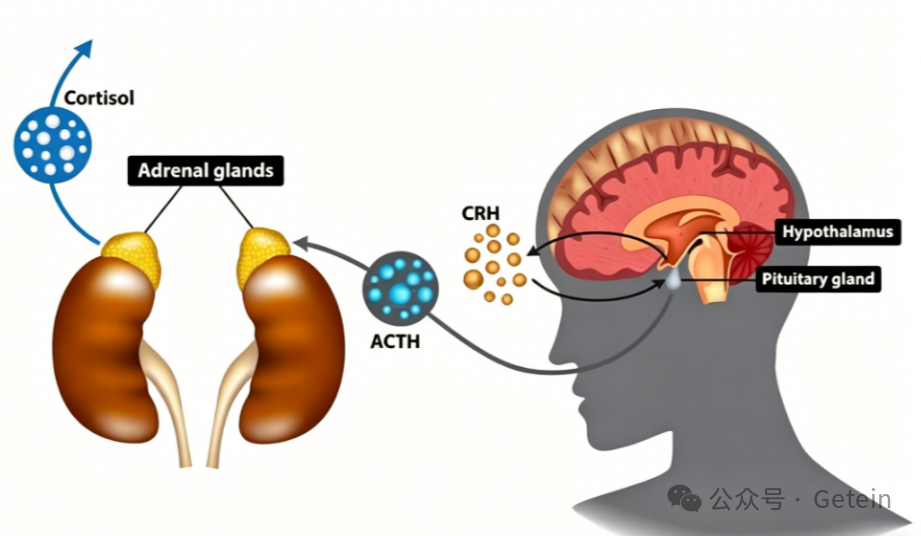
Hypothalamic‑Pituitary‑Adrenal (HPA) System
The HPA axis is the body's central stress response system. CRH will stimulate the pituitary to release adrenocorticotropic hormone (ACTH). ACTH, in turn, acts on the adrenal cortex to secrete cortisol – a glucocorticoid that modulates metabolism, immune function, and vascular tone. Chronic cortisol excess leads to sodium and water retention, increased vascular reactivity to catecholamines, and ultimately sustained hypertension.
Our solution to fight against hypertension
Getein offers hypertension testing on our advanced chemiluminescence platforms. These tests are not only easy to operate, but also provide highly accurate results, combining high sensitivity and excellent specificity.

Open WeChat and Scan the QR Code. Stay Tuned with Us.