April 2026
D-Dimer: The "Footprint" Your Blood Leaves After Clot Formation
What is D-Dimer
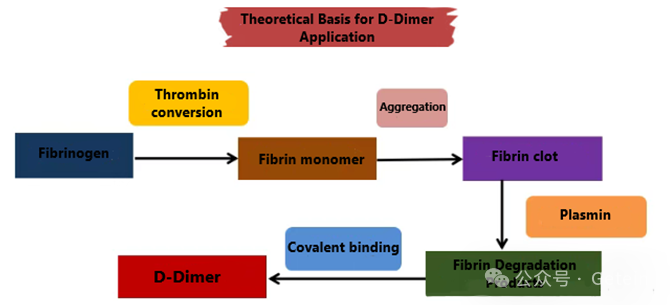
D-Dimer is a small protein fragment produced when blood clots dissolve.
To understand it simply: when your body forms a blood clot (a process called coagulation) and later breaks it down (fibrinolysis), D-Dimer is the "footprint" left behind.
Key fact: D-Dimer can only be produced when both thrombin (clot formation) and plasmin (clot breakdown) have been activated. This makes it a direct marker of ongoing clotting and fibrinolysis activity.
When D-Dimer is Abnormal
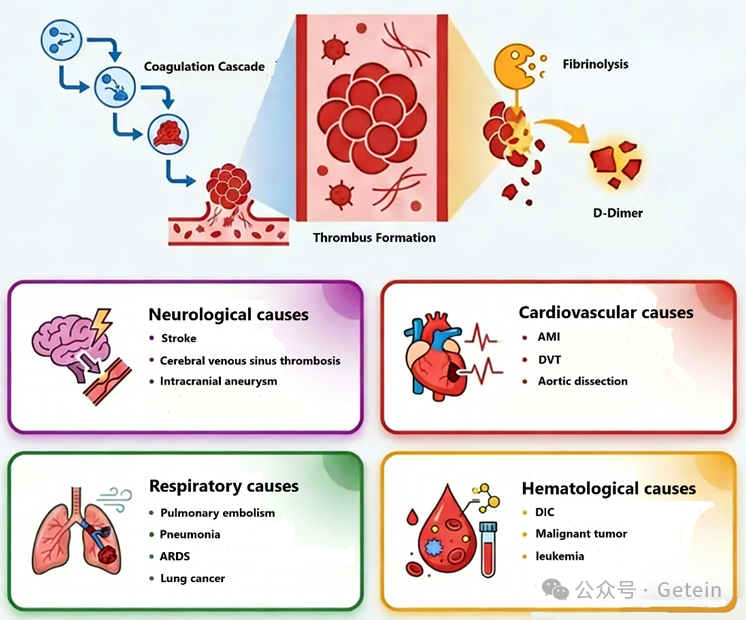
Many physiological and pathological conditions can cause fibrin formation and fibrinolysis activation, leading to elevated D‑Dimer levels, which is why correct interpretation of D‑Dimer requires comprehensive clinical assessment.
Clinical Values of D-Dimer
The core significance of D-Dimer testing is to reflect whether there is thrombosis and secondary fibrinolysis hyperactivity in the body.
1.Rule out the risk of thrombosis
It is an important screening indicator for venous thromboembolism (VTE) such as deep vein thrombosis (DVT) and pulmonary embolism (PE).
If the D-Dimer level is normal, you can basically rest assured that the possibility of acute thrombosis is very low; if it is significantly elevated, further imaging examinations are required for confirmation.
2.Monitor the patient's condition
For patients already diagnosed with thrombosis, changes in D-Dimer levels can reflect whether the treatment is effective. A decrease in the value indicates that the thrombus is dissolving and the patient's condition is improving; if the level continues to rise or rises again after a drop, it may indicate recurrence of thrombosis.
3.Auxiliary diagnosis of ACS&DIC
D-Dimer levels are commonly elevated in patients with acute coronary syndrome (ACS), reflecting enhanced fibrin formation and fibrinolysis activated by vascular endothelial injury, and local thrombosis. Moreover, it can reflect excessive fibrin degradation, serving as a core indicator for early diagnosis and dynamic monitoring of disseminated intravascular coagulation (DIC).
Application Scenarios
D-Dimer is a crucial biomarker with extensive application scenarios in clinical practice. As a sensitive indicator of fibrinolytic activity and thrombosis, it aids in diagnosis, treatment monitoring and prognosis evaluation of various thrombotic and hypercoagulable diseases.

Getein's D-Dimer Solutions
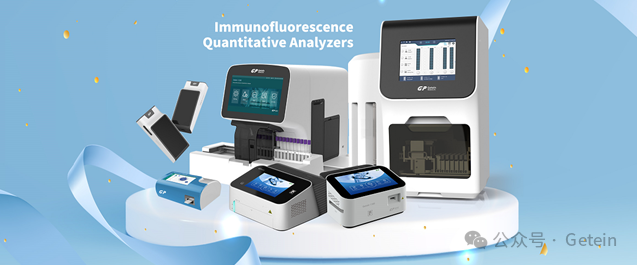
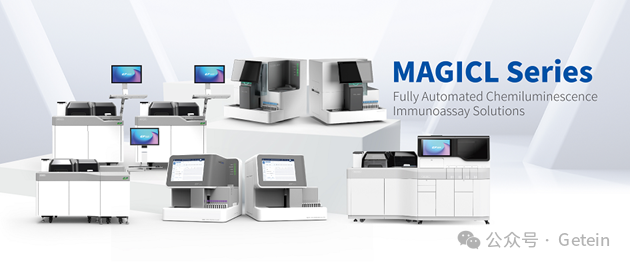
Getein provides D-Dimer test on multiple platforms: including Immunofluorescence, Chemiluminescence, Clinic Chemistry and Coagulation. They are easy to operate, with high sensitivity and excellent specificity.
These relevant test kits are supported on our devices:
Immunofluorescence Platform:
Chemiluminescence Platform:
Clinic Chemistry Platform:

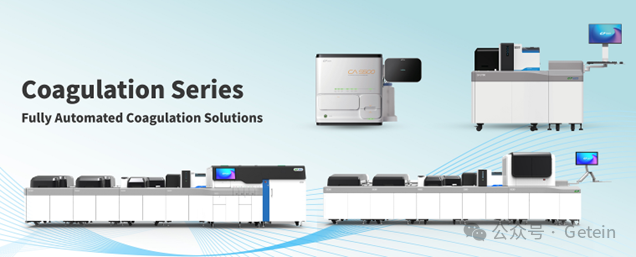
Coagulation Platform:

Open WeChat and Scan the QR Code. Stay Tuned with Us.